Emergency Tree Removal In Rockhampton: What To Do When A Tree Falls On Your Property
This guide is for homeowners facing that situation for the first time. It covers what to prioritise in the first hour, how to handle the insurance side of things, and why emergency tree removal in Rockhampton needs a professional — even when the damage looks manageable.
The First Thing to Do Is Nothing — Except Get Clear
The instinct to go outside and assess the damage is understandable, but it’s the wrong move until you know what you’re walking into. Fallen trees are not static. A trunk or branch under tension can release suddenly when disturbed, and a tree resting against a structure may shift as the building settles beneath it.
Get everyone away from the fall zone. If the tree has come through the roof, vacate those rooms entirely.
Two hazards demand an immediate call before anything else:
- Power lines — if any overhead lines are down, sagging or in contact with the tree, call Energex on 13 62 62 immediately. Do not approach or drive over a downed line under any circumstances
- Gas — if the tree has struck the building and you can smell gas, leave the property and call emergency services
Downed Power Lines: A Separate Emergency That Needs a Separate Call
People consistently underestimate the risk from downed lines because there’s no visual indicator of whether a line is live. A line on the ground or draped over a fallen tree may look inert. It may not be.
Rockhampton and the surrounding region have significant overhead power infrastructure, and storm events that bring down trees often affect lines at the same time. The rule is eight metres minimum from any downed line — and keep everyone else well back too. Call Energex on 13 62 62 and wait for their clearance before allowing anyone into that zone. Your tree removal call and your Energex call are two separate things. Both need to happen.
Document Everything Before Anyone Touches the Scene
Insurance claims depend on documentation, and the window to capture the original scene closes the moment anyone starts moving material. Before any debris is shifted or any contractor arrives, photograph and video everything.
Cover the full extent of the tree, where it came from, and every surface it’s damaged. Time-stamped photos from a mobile phone are standard practice and accepted by most insurers. The goal is a clear record of the original state of the scene — something that can’t be reconstructed once material has been moved.
Contacting Your Insurer: What the Conversation Needs to Cover
Call your home insurer once the immediate hazards are under control. Most policies provide some cover for storm-related tree damage, but there’s real variation in what’s included.
Structural damage to the home is typically covered. Whether the cost of removing the tree itself is covered is a separate question, and the answer depends on your specific policy.
Ask whether emergency tree removal is covered, whether you need to obtain quotes before authorising work, and whether you can arrange temporary protective measures — such as tarping a damaged roof section — before a formal assessment is completed. Write down the name of the person you spoke with and follow up with an email. In a complex claim, that record matters.
Why a Fallen Tree Is Not a DIY Removal Job
A fallen tree looks like a physical problem with a physical solution. The reality is more complicated. Sections of trunk and canopy under compression or tension can snap back violently when cut, and a tree resting across a roofline is exerting load on that structure — removing sections in the wrong sequence can cause further collapse of whatever is beneath.
Professional arborists assess these conditions before making a single cut. They identify where the load is, what will move and how, and use rigging systems to control the removal sequence. That assessment process isn’t visible from the ground, but it’s what separates a controlled removal from a second incident.
What a Professional Team Actually Does on Site
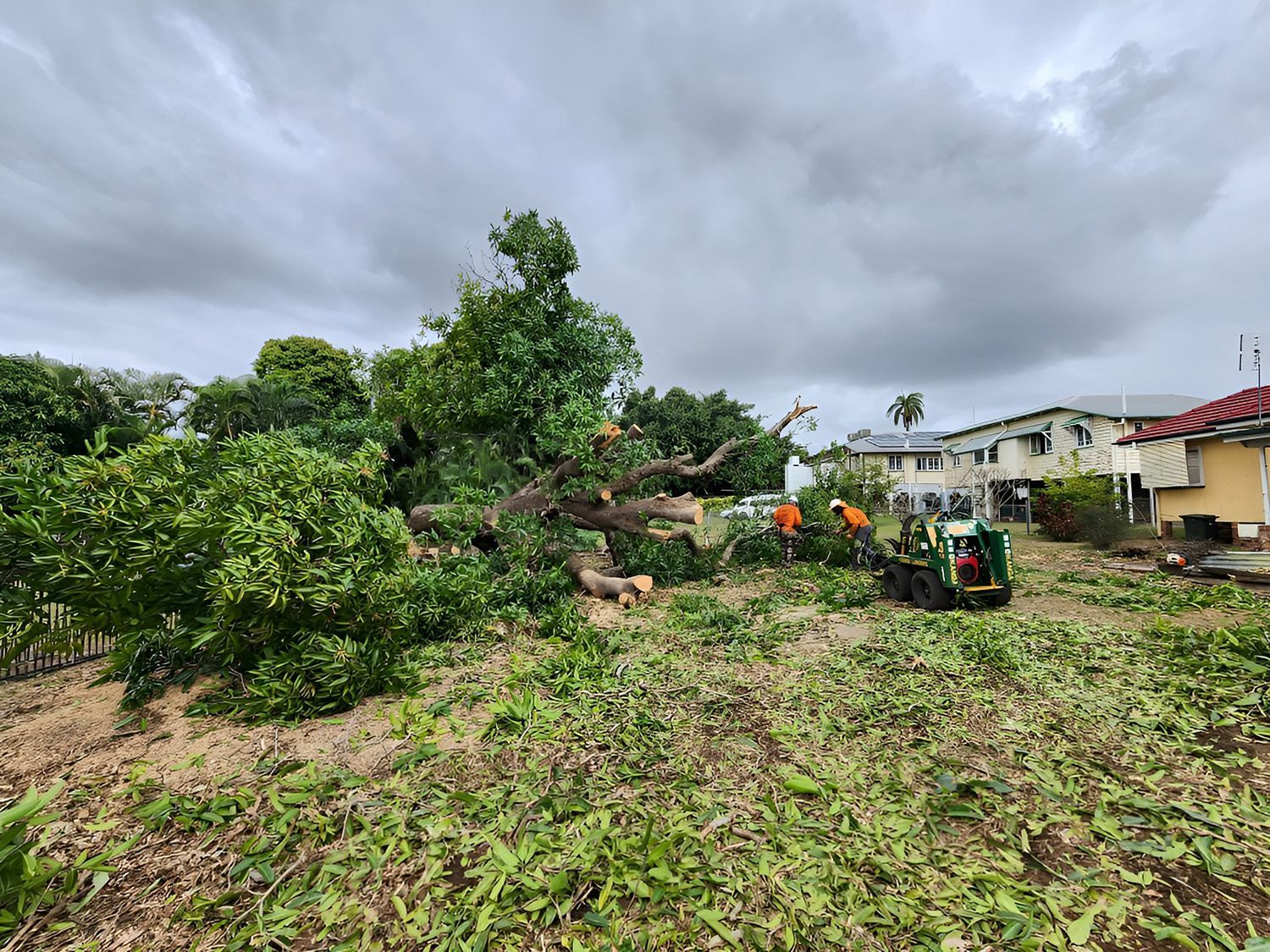
A qualified emergency tree removal team doesn’t start cutting the moment they arrive. The first step is a site assessment — evaluating structural risk, checking for power line proximity, reading how the tree is loaded against what it’s resting on. From there, removal is planned in a deliberate sequence, with material cut and lowered in a controlled manner throughout.
A thorough team will also scan the rest of the property. The same storm or root failure that brought one tree down may have compromised others nearby, and identifying that while the crew is already on site is far easier than responding to a second callout later.
Council Permits and Tree Removal in Rockhampton
It’s worth knowing that tree removal in Rockhampton may be subject to Rockhampton Regional Council requirements, even after a tree has already fallen. If the tree was significant or subject to a vegetation protection order, there may be notification or documentation obligations.
In genuine emergencies, councils generally allow work to proceed and require notification after the fact rather than prior approval. Document the circumstances clearly, retain everything, and work with a local arborist who knows the relevant requirements — it removes one more thing to deal with when you’re already managing a stressful situation.
Once It’s Over: The Questions Worth Asking
There’s a tendency, once the tree is gone and the adrenaline has worn off, to close the chapter. That’s understandable — but a few things are worth attending to before moving on.
If the fall wasn’t purely storm-related, the root system may tell a story about disease or structural failure that’s relevant to other trees on the property. And if it was storm-related, a tree that survived the same event isn’t necessarily unaffected. Soil saturation, root disturbance and canopy damage can compromise stability in ways that won’t become obvious for months. Catching that early is a much better outcome than calling for
emergency tree removal in Rockhampton twice in the same season.
Barlows Tree Services: Emergency Response Across Rockhampton
At Barlows Tree Services, we handle emergency callouts across Rockhampton and the surrounding region — storm damage, structural failures and hazardous trees. Our team assesses the full site before any work begins and manages removal with the care that working near structures demands.
If you’re dealing with a fallen tree and need professional help, call us directly. We’ll talk you through the situation, advise on what needs to happen first, and get there as quickly as we can.